Sunday, 14 June 2015

Get2ISTE2016: Ways to get Support During ISTE2015

Three educators heading to ISTE through alternative funding via #Get2ISTE has proven the concept could work and could be worth further exploration.

But will the idea be successfully rolled out or adopted? As this is a new way of doing things, the odds are not necessarily favourable. This post looks at ways that educators who are interested in seeing this model work might want to consider using to put social proof to work at ISTE this year.

This may be necessary to demonstrate to stakeholders who have not engaged with the idea yet, but who are vital to making it work.

If educators are interested in seeing this work they will need to demonstrate there is more demand for the idea compared with more traditional forms of marketing. Otherwise the status quo will remain in place.

"Discontinuous innovations can be ahead of their time and users are not ready to spend money or change habits for unproven benefits. The company (In this case an idea) may run out of money (Causes don't get funded) waiting for the market to develop" Crossing the Chasm

Anyone who knows the background to #Get2ISTE may want to skip the first section of this post, although it does reiterate the need for listening to educators, co-creating with potential users and the importance of trial and error with new ideas.

#Get2ISTE Background
At ISTE 2013 Steven Johnston gave a keynote about his research on "Where Ideas Come From" and slow hunches. This idea came from a number of sources;

Sales Experience: Through exhibiting at conferences at with former employers, I found the existing model to be frustrating for all stakeholders: my employer, educators and the team manning the stand (For more info see: The Trouble with Conferences).

Listening to Educators: Prior to #ISTE14 one of the #EdTechChat moderators said they would not be able to make the chat's ISTE Tweetup due to costs. This prompted me to write wrote a post detailing the situation and the rationale for "social tipping" to suggest how and why various stakeholders could contribute. (EdChat Moderators: ISTE or Bust)

The idea wasn't very well received. Either the suggestion wasn't put across in a compelling enough way for people to take action, or there were too many objections around the idea... namely that educators felt this would be benefiting financially from hosting their chat.

The marketing success of ISTE14 for me was Tweechme App, and provided some further (And very compelling) evidence to suggest Get2ISTE had value. Susan Bearden collaborated with Mad Learn to develop the TweechMe App and the Twitter stream was buzzing about this app during ISTE.

EdTechChat: As Susan is a moderator for EdTechChat so, if we add Tweechme to the mix, then every aspect of this idea originates from this chat.

In addition to this, I have been developing an idea that also has its origins based on insights gained from EdTechChat for the past year.

Dec 13: I saw the writing was on the wall for sales reps via EdTechChat
Proof of Concept: Through collaborating with Nikki Robertson and Steve Isaacs in a number of ways, Get2ISTE was able to be discussed in a different context. 

Through their work with Nurph, Nikki and Steve removed these objections about educators "selling out," which facilitated discussions with other early adopters. There were a few models that were discussed, and other objections were raised and obstacles to overcome.

These were navigated through and PledgeCents created their #Get2ISTE causes. Three educators are heading to ISTE through this alternative model of support.

Is Get2ISTE Set to Become a Success? Erm, Probably Not...
So is ISTE a success? Is it set to become a success in 2016? I would argue that while the potential is there for it to be a success, as things stand, this is unlikely to be the case.

Given the lack of support from suppliers and event organisers to date (on social media, at least), one potential outcome is that there will be lots of causes created but they will go unfulfilled. This may impact on educators view of the crowd funding platform, and may even have a knock on effect on the potential these users feel crowd funding for classroom resources, which is significant*!

To prevent this from happening, anyone who would like to see this adopted might want to put "social proof" to work to demonstrate to suppliers there is a demand for Get2ISTE.

The rest of this post includes ways to get suppliers involved with #Get2ISTE16 at this years' conference.

*NB Know anyone Looking to crowdfund a 3D Printer? This suggestion and collaboration with 3D Hubs might see more causes get fulfilled: Crowdfunding for Edu in 3D.

Proof of Concept
The first thing to do might be to demonstrate that this isn't a new idea, and this kind of support probably happens at most conferences.

Companies like Apple, Google, ClassDojo, Edmodo, BrainPop and Glogster have ambassador programs, some of which may cover expenses for educators to attend events and discuss how they collaborated in the development stages, and how they use the services in class at these conferences and workshops etc.

There are also other educators who will do the same level of co-creating and evangelising via social media, but don't get taken to events etc.

To put "social proof" to work here we could ask educators 3 questions:
  • Have you ever collaborated and/or co-created a product or service with a company?
  • Do you regularly recommend a particular product or service to your PLN?
  • Have you ever been invited to attend an event on behalf of any suppliers?
In the first 5 weeks of EdTechChat 40 companies were mentioned 400 times, so these things already take place and companies benefit from educators input.

For the purposes of Get2ISTE, it might be useful to highlight the extent that this collaboration already takes place. Please feel free to take a moment to fill out this brief survey;


Further evidence for suppliers supporting Get2ISTE can be found when we consider how peer reviews are perceived compared with the company's sales efforts as

1) Word of mouth referrals are the most effective method of sales
2) The level of suspicion that sales people are viewed with

Combine all this together and throw in the reach and influence that connected educators have, and we can see why educators are more effective than anything a company rep might be able to do to get traction with an idea.

Being cost effective for the supplier and helping educators make it to ISTE is surely some win-win collaboration.

Selfless Givers Vs the Psychopathic Corporation
Could you envisage a sales rep putting together the same kind of resources as Jerry Blumengarten has, without looking for compensation?

Can you imagine educators charging for access to their site or sending an invoice to companies for featuring them on their website?

Educators are selfless givers, they'll help anyone they can... but don't tend to ask for help themselves.

Compare this with the profile of corporations. The documentary "The Corporation" suggests that if corporations were people, they would fit the World Health Organisation's profile for psychopaths. Therefore, they may not be all that generous and/or a willing candidate give anything they don't have to...

The Pathology of a Corporation
Obviously this is a massive generalisation and there are a lot of EdTech companies who have a fantastic culture and listen to educators and find various ways of showing that they value their time.

This survey could demonstrate the extent that these types of suppliers listen to educators. If it can be demonstrated that something is in their best interests, a corporation that has any psychopathic tendencies it might be possible to sell an idea like Get2ISTE to them.

Existing Customers & Word of Mouth Referrals
A manufacturer is not through with his customer when a sale is completed. He has then only started with his customer...the sale is only something in the nature of an introduction. If the product does not give service, then it is better for the manufacturer if he never had the Introduction, for he will have the worst of all advertisements – a dissatisfied customer. Henry Ford

By far the most effective sales and marketing is word of mouth referrals. A high net promoter score is a great indicator to let suppliers know if they have achieved product market fit.

Net Promoter Score is based on the fundamental perspective that every company’s customers can be divided into three categories: Promoters, Passives, and Detractors. By asking one simple question

How likely is it that you would recommend Get2ISTE to a friend or colleague? 

You can track these groups and get a clear measure of your company’s performance through your customers’ eyes. Customers respond on a 0-to-10 point rating scale and are categorized as follows:
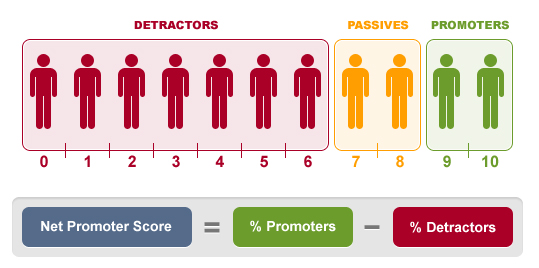
  • Promoters are loyal enthusiasts who will keep buying and refer others, fueling growth.
  • Passives are satisfied but unenthusiastic customers who are vulnerable to competitive offerings.
  • Detractors are unhappy customers who can damage your brand and impede growth through negative word-of-mouth.
The three existing customers may be pretty pleased with #Get2ISTE, so may do lots of evangelising at the event.

The 4-5 people who did not reach their goal could potentially become detractors and/or less likely to use the service again, so it's important to learn from this group and find out if anything could have been done differently.

Early adopters and Get2ISTE Proponents
In Crossing the Chasm Geoffrey Moore discusses the Technology Adoption Cycle, how 20% of any market is made up of the early adopters. Moore uses electric cars to look at the different profiles.


I think that it could be safely argued that the majority of educators attending ISTE fall into the "I want to be first to use new technology" category.

I wonder how many new discontinuous innovations that ISTE delegates have championed and introduced to their colleagues, schools, districts and other communities that they are involved with.

Supply and Demand Issues
There may only be three people who will Get2ISTE through crowd funding but, given the conference will be full of early adopters, a high level of interest it could mean #Get2ISTE2016 will have some supply and demand issues.

For examples, if Nikki Robertson was to recommend Get2ISTE at her Birds of a Feather ISTE presentation, with her sales skills and the potential reach of this audience, the demand could easily be very high.

Without the support of suppliers there would be the potential of lots of unfulfilled causes.

Unfulfilled causes may see the idea fail to "Cross the Chasm," and die a quiet death after limping along for a few years with hit and miss results. However, this doesn't need to be the case... Not if a little hustle and social proof was used.

Demonstrate Demand
Social Media: If Nikki suggested that any Birds of a Feather attendees who would like to see Get2ISTE thrive to;

1) Ask their followers to RT details of Get2ISTE if they are supportive of the idea.

2) @Mention any suppliers they are proponents of if they were happy to evangelise on their behalf.

Social proof would be particularly effective if everyone did this during the conference, and at the same time.

Obviously anyone who opens a #Get2ISTE 2016 cause could follow suit by Tweeting out that they've signed up to Get2ISTE and @Mention companies they use and like.

Demand could also be created by educators encouraging their PLN to sign up to #Get2ISTE. A competition where the person who signs the most people up to Get2ISTE 2016 could be going to Denver courtesy of ISTE/PledgeCents (And could involve an exhibitor or supplier through sponsoring the competition)

In Real Life...
If people attending ISTE decide to open a Get2ISTE cause before or during ISTE2015 having a T-Shirt with text like
                                               "Ask how you can help me Get2ISTE 2016"

Could work well. Equally, the crowdfunding platform or organisers could print some T-shirts and hand them out to anyone who registers their cause at the conference and recommend delegates wear them at ISTE.

This would be another way to put social  proof to work at the event, the more people wearing Get2ISTE T-shirts... the more educators will demonstrate there is demand and an appetite for change... the more this will influence suppliers to consider alternative marketing opportunities that would be welcome by educators.

There may not be time to print T-shirts, but there would be time to print off some badges/Stickers, it may not look as snazzy, but could be just as effective. 

How to start a Revolution: T-shirts are a great way to show support for a cause 
If enough educators wear t-shirts/badges during the conference to highlight to suppliers that there is a demand for this, and might encourage sales and marketing reps to give it a try.

Educators might also want to discuss this initiative with ISTE exhibitors whose product they use, and let them know they would be happy talking about the product with other teachers at next year's event.

Ask for the Business
Speaking from painful experience, I know educators can feel pressured by vendors in various ways at conferences... so how about turning the tables? If educators have opened a Get2ISTE cause and are feeling pressured by exhibitors maybe they could say "Sure I'll come and listen to your pitch, if you listen to my pitch for Get2ISTE"

This need not be with the expectation of getting a contribution (exhibitors have already paid for an exhibition stand, so this would be pretty unfair), but it would mean that suppliers and organisers would see there is demand and may be more likely to factor Get2ISTE into their marketing budget in 2016.

Post Conference
If educators show enough of an interest, ISTE organisers may also get involved. When taking a booking from exhibitors next year, perhaps there will be an option on the booking form asking

"Do you want to contribute $100 to our Get2ISTE fund to help educators get to the event?"

500 Exhibitors paying $100 would be $50,000 and ISTE could arrange an event for contributing exhibitors and recipients to meet up to discuss how they can support each other and provide an ROI.

I can see a number of ways that this initiative could be developed and lead to even more collaboration with suppliers and educators, but there is no point mentioning these as this would need to take off first.

If the dynamics from the 2015 pilot remain unchanged ie Less than 50% of causes fulfilled, little involvement from suppliers or organisers (based on activity on social media), then the idea will most likely fail in the medium-long term.

Self Promotion Vs Sales Vs How can I Help
I've written 6 or 7 posts on this idea now. Some posts have been to outline the idea, others to discuss (and attempt to remove) any objections, and some are to raise awareness of the idea.

Some people have suggested that I am promoting my own stuff when discussing Get2ISTE. I don't feel this is my idea... If anything it is the brainchild of EdTechChat, and I've simply taken a moment to detail my sales experience and to explore the idea.

I'm not trying to "sell" an idea to anyone... and I have no interested in "selling" anything to anyone either. However, I understand that ideas need a bit of a nudge to get them started before people buy into them.

If the right level of buy in is not achieved with all stakeholders, Get2ISTE is unlikely to work. So I've taken a moment to suggest some things that might help.

I have a standing offer of "How can I help you achieve your goals" to any educator or EdTech supplier who has a great culture and is doing good work.

I've taken my experiences with attending conferences, insights from EdChats, my involvement with Get2ISTE, my sales research, considered some potential challenges and suggested ways to put social proof to work in the hope of addressing these challenges.

However, the only way any of these ideas will work is if enough people act, if they don't any impact will be limited.

Friday, 12 June 2015

#Get2ISTE2015... Any Last Minute Support from Suppliers?


It's a few days until the Get2ISTE campaigns finish, and I thought I would see if there might be some last minute support from any suppliers this year.
From #NotAtISTE... To I am now!
Eight educators created a Get2ISTE account on PledgeCents and 3 have been fulfilled, so will be going to ISTE as a result. Yay! One other cause is live but closes at the weekend.
I understand from some of the people who reached their target amount that the majority of the contributions have come from other educators they work with, friends, family and their students' parents.
I was wondering if any suppliers might be interested in setting a precedent for next year, by supporting the last cause that is still live.

TweechMe ISTE Marketing
One of the sources of this idea was the fact that the TweechMe App got a massive amount of exposure at ISTE last year. This app was the result of collaboration and co-creation between EdTechChat moderator, Susan Bearden (@S_Bearden) and Crecerance (@Crecerance).

I followed the event via social media so don't know if they had an exhibition stand at the event, or how much of a promotional budget they had... but Tweechme really stood out. I wondered if there might be ways to replicate this successful marketing campaign.
Building Relationships
I understand that some of the people who signed up to #Get2ISTE had not used PledgeCents previously, so a few questions to consider about these fledgling relationships; 
  • Do you think these 3 Get2ISTE early adopters will go out of their way to say hello to PledgeCents at the event?
  • Do you think they'll tweet positive things about a service due to this initial experience?
  • Do you think they'll be using the service again, whether for ISTE or for classroom supplies?
Regardless of what stage your product/service is at, having people who go out of their way to say hello, share positive experiences about the product/service and repeat business is always useful.

Value Proposition and ROI
We'll find out if this happens when the Get2ISTE people arrive in Philadelphia in a couple of weeks.

Embedded image permalink  
If this does work out, and the various stakeholders feel it's worth exploring further for 2016, what would the marketing metrics look like for suppliers? What kind of metrics are suppliers interested in? Influence, reach, ROI, how proactive the educators they might support would be?

I've no idea how individual educators might be willing to support suppliers as a result of this kind of support, but let's take a look at some of these things with PledgeCents Get2ISTE competition winner and the last live cause: Nikki Robertson and Cori Coburn.

Reach
Nikki Robertson will be hosting a Birds of a Feather session at ISTE, which is for Twitter chat moderators to share their experiences. The last time I checked EdChat moderators had a collective reach of 3 million followers on Twitter.

Any products that this group like and decide to Tweet about will reach a significant number of educators.

Proactive
Nikki has went from not going to ISTE, to presenting at the event... That's what I call proactive! She is also extremely proactive with suppliers and evangelizing for any companies whose products she likes. #TLChat which Nikki co-moderates with Shannon Miller (@ShannonMiller), also covers topics like "Vendors are our friends"

Embedded image permalink
Influence
Cori (@CoburnCori) is also an EdChat moderator (#Reg5Chat) and is what marketers might call "an influencer," as she is also well connected and proactive.

To give you an idea of the potential marketing impact that supporting Cori to Get2ISTE might have, consider this scenario.

If a supplier was to support Cori which meant that she was able to meet up with any of her Minority Women in Tech #SXSWEdu co-presenters: Shelly Sanchez @ShellTerrell), Sarah Thomas (@sarahdateechur) and Rafranz Davis (@RafranzDavis).

If these 4 educators tweeted their appreciation for the organisation who helped Cori get to the event, their tweets would reach over 100,000 twitter accounts.

How much would suppliers pay marketing companies for this kind of exposure? This is before we even discuss any positive comments the supplier might get at any Reg5Chat Tweetups etc.

NB Anyone concerned about issues around connected educators benefiting financially from their influence please see I'm an EdChatMod...Get me to ISTE2015

Welcome Marketing
Another consideration with #Get2ISTE is how unwelcome some of the existing sales and marketing methods of suppliers are at conferences, as Lindsey Own and Steve Isaacs highlight in this post


One conundrum here is that I have tried most of these things in some areas of UK education, but eventually gave up trying to engage this sector (for the moment). 

I know that new ideas need a bit of promotion to gain momentum, but I've also found that trying to build some momentum for Get2ISTE can run the risk of looking like self promotion to some educators. 

At the same time, forwarding emails from educators looking for support to Get2ISTE to suppliers you also run the risk of people asking to be unsubscribed from your updates as "This information is of no interest," and one supplier put it. Talk about a tough sell!

So knowing what the right course of action to take is a little tricky. However, what I do know is

1) Through my experiences of attending conferences with previous employers as an exhibitor, I know that existing marketing methods at events are ineffective and unwelcome.

2) The reaction from most of the educators I've discussed the concept of re-directing a little marketing spend to support educators with #GetISTE and EdCamp sponsorship has been well received.

So I feel that suppliers supporting this is worth exploring further. If I was a supplier responsible for marketing spend (Unfortunately, the perpetual "pre-revenue startup" due to loads of research and the on-going search for Product Market Fit. Sigh!!), this is where $600 of my budget would go to in the next few days 
Will any #ISTE2015 Suppliers help Cori #Get2ISTE by 13th June?
In my next post I will suggest ways that anyone interested in #Get2ISTE16 who will be at ISTE this year might be able to put "social proof" to work, to get support for their cause with suppliers at the conference.

Thursday, 11 June 2015

The Genius Mindset of a Retrospective Entrepreneur

MindGenius
I attended Glasgow's Startup Grind event last night, which was of particular interest as the speaker was Donald Maciver. Donald is the co-founder of Gael, a company that was sold earlier in the year for £21 million.

"Cashing out" of a business for £21 million had little to do with my decision to go along to this event. What was of interest, however, is that some former colleagues work at Gael, and said it was a great company to work for. I was keen to hear more about the culture.

I could see why my ex-colleagues enjoy working at Gael after attending the event! I thought I would compare Donald's humility, leadership, focus and attitude to sales with some of the great books that I've read... I also wonder if there might be some scope for some mutually beneficial Silicon Valley type co-opetition with some other organisations that could benefit students and businesses.

I've no idea how useful the way I have internalised the books I've read will be, how typical my experiences are or how compelling my interpretation of last nights meeting will be in this post... but it sure feels like my plans are on the right track, so thought I'd share my research and thoughts.

Regardless of how accurate my ramblings are, two things are certain:

1) I have sure found the books, Ted Talks and blog posts mentioned below to be extremely useful.
2) Given the changes that are taking place in sales and with support calls, I would encourage anyone working in these areas to check out some of the great books mentioned below. 

Level 5 Leaders
As I've come to expect from books like Good to Great, the kind of "Level 5" leaders who are worth listening to and following have a very particular kind of humility, so they don't tend to attract the same attention as some of our celebrity CEOs.

We get a sense of this humility early in the fireside chat with Donald:
I'm not an entrepreneur, I'm just a guy that got lucky...
I'm a retrospective entrepreneur 
From Good to Great: What Defines Level 5 Leadership
This reminds me of Darwin Smith's humility when he summed up his extremely successful tenure at Kimberley Clark by saying, "I never stopped trying to become qualified for the job" 

(More about Darwin Smith and Level 5 leaders can be found in this great article The Misguided Mix-up of Celebrity and Leadership)

Small Giant
Donald goes on to explain that he's not motivated by money, he cares more about doing the right thing. One of the core values of a company that features in Bo Burlingham's book Small Giants is 

"We will always do what is right, even if it is not necessarily profitable"

I think that Gael would fit the profile of Burlingham's book which is about

"Maverick companies have passed up the growth treadmill—and focused on greatness instead.Entrepreneurs have rejected the pressure of endless growth to focus on more satisfying business goals. Goals like;
  • Being great at what they do 
  • Creating a great place to work 
  • Providing great customer service 
  • Making great contributions to their communities 
The similarities were not hard to notice as Donald spoke about having a profit share for everyone in the company, and bonus structures for people in all departments of the business, not simply the case of sales people getting commission. 

Exit Strategy: Avoiding The Biggest Mistake Leaders Make
Looking after employees is demonstrated further when discussing the founders consideration for staff when putting an exit strategy together;

"My co-founder and I have a huge responsibility in the existing business. We have 120 people who helped us get there... we could have gotten another £3-4 million by selling Gael to other companies, but I would have sold my soul"

The founders also appear to have done all they can to ensure that the business merger didn't adversely affect the existing culture either.
It's not just about you
Focus and Hard Work
But how did this entrepreneur "get lucky" enough to build a company that others wanted to buy? There are three strategic recommendations that Donald has for the startup attendees 1) The need for focus, 2) Working with early partners and 3) Doing the grunt work in your industry. 

The need for focus 
Segment your market and pay attention to each and every niche. Gaels competitors may categorise their airline customers as "the aviation sector", Gael broke the industry down to 8 sub-sectors and treated customers in each segment as a different market, all of whom had different priorities and needs from the other 7 sub-sectors so were treated differently.

If this was a lecture, it would be a text book case study with advice from "Why Startups Fail" and "Crossing the Chasm," both of which I was given kind permission to reference in my EdTech report: Developing Relationships and Delivering Value

Working with an early partner
Gael found that Emirates "got" what they were trying to do, so they worked together to get product to around 80% of what this particular product would eventually become in the sector.  

When the company moved into healthcare, the same model was applied. They worked with a pathology professor to iterate their way to product market fit. Today they work with 80% of pathologists in the UK.

Again this is text book stuff! Geoffrey Moore recommends that startups and companies that are new to a sector should;

"Get at least one visionary who is already familiar with you and partner with that visionary, in return for their support in the sector, to help remove some of the obstacles to getting the application adopted" 

It is my belief that this approach will lead to sales being possible without the need of sales people. Conversely, to neglect these crucial early partnerships may well lead to significant problems with the sales process in the longer term. See The Technology Adoption Cycle: Early Market Problems section of this report for more information (Page 40).
Image result for geoffrey moore leaderships lessons from dancing guy
Finding those early partners and case studies take time... but it can be fun

Doing the kind of grunt work that no-one else wants to do. 
Donald advocated for people to find the "unsexy parts" of your industry, the tasks that no-one wants to do and go for it.

I think that in any industry there are tasks that no-one likes doing, the CEO doesn't like them because it's a necessary evil, but is a drain on resources it doesn't add value or contribute to the bottom line. Staff don't like doing these tasks because they are monotonous and mundane.

The good news from a startup perspective is that the only thing that a lot of these tasks require is the only thing that a struggling startup or entry level employee has: Time.

Tribal Leadership
Donald discussed what he calls the three pillars for Gael, which detail their business aims. There were to

1) Crush Bureaucracy
2) Automate routine tasks
3) Data will inform of improvement.

When you add the way that Gael executes their plans, they sound a lot like Dave Logan's Tribal Leadership.

Gael makes strategic and operational plans based on the MindGenius mapping they developed. They come up with a strategic plan at the start of the year, then develop an operational plan, then its a case of get on with it.

"When you map something you can see where the gaps are... MindGenius is an incisive way of working, there is no hiding place"

The idea of data informing people where improvements can be made, as Gael work airlines, this data can help prevent fatal accidents.
Regarding the issue of automating routine tasks, this echos the sentiments of The Best Service is No Service and Amazon's guide to help other businesses to liberate customers from customer service, keep them happy and control costs. Add to this book case studies like
You can perhaps see why I am keen to reiterate these points 1) Scotland's call center industry is worth £84 billion 2) With results like Amazon's, Lithium and IBM these jobs are not going to be here in the medium-long term. 3) There are 0 courses in colleges or jobs advertised on job websites for community management in Scotland.

Sales and customer service is rapidly changing, if you're in these jobs get re-skilling... Explore Community Management, social selling and inbound marketing.


Sales & Strategy
I wanted to jump out my seat and start whooping when I heard Donald's take on sales. I saw the writing on the wall 3-4 years ago, and knew that there would be some short term pain with my own attempts to re-skill, but there could be some long term benefits too.

Donald explains his approach to sales and feels that three different types of sales people are needed to deal with three different kinds of customers

I Want it: When you present an early concept to a customer, it's nothing more than an idea on a whiteboard. Some customers won't get the idea, whereas others will see an opportunity and it may be a discontinuous innovation that provides a competitive advantage.

To give an example, the music industry dismissed and confronted digital music via law suits. Steve Jobs saw the emerging technologies of mp3 players and Napster as an opportunity get a jump on the competition. Visionary customers like this may expect to see some radical changes between old methods and the new.

You need sales people to collaborate and co-create with these early customers. Those who dig deep and have a proper engagement with the early adopters who help develop the idea.

When looking for people to fill these roles Donald looked towards his operations team, they knew the product inside out and could have more detailed discussions around functionality etc.

This is how I ended up in the dark art of field sales. After 4-5+ sales people failed to get traction on a project I was asked if I wanted to give it a go as I had operational experience with the service.
Partnering with "visionary" customers is key to
informing the "pragmatist" mainstream mass market
You can have it: As word spreads within the industry that Gael was doing good work with Emerates and other early partners, the "early majority" would have become interested. This is when traditional sales people would have been successful with getting new clients.

The early partnerships have the case studies that convince the early majority that this is a "safe" product to buy. 

You've Got It:  From what I could understand these were customers who had bought the product but they needed a certain amount of guidance. It sounded like this was the laggard market, who can tend to need a lot of support.

Through exploring the sales process over the last few years I understood these ideas but in a slightly different way, Donald says he's not sure that there's a sales person that could do all 3 types of these sales jobs.

However, if we swapped the profile of sales people with customer profiles, the technology adoption cycle... and some ideas I've been exploring and some initial pilots, I would argue that no sales people would be required.

I believe that roll out without sales people is possible, something that my good friend (Who I've still never actually spoken to) Nikki Robertson has helped test.


Marketing
Donald changed the word marketing to "demand generation," the reason for this was to highlight that the role was to stimulate demand and make things happen.

This sounds like the cornerstone of everything I'm working on at the moment, subscribers to my blog might be able to guess what it is... Yep! That's right, it's good old social proof;

"No leader can hope to persuade, regularly and single handedly, all the members of the group. A forceful leader can reasonably expect, however, to persuade some sizable portion of group members. Then the raw information that a substantial number of group members has been convinced can, by itself, convince the rest. Thus the most influential leaders are those who know how to arrange group conditions to allow the principle of social proof to work maximally in their favour" Robert Cialdini


I had to blog every day for a week to take the raw information to address the objections with #Get2ISTE but we got there in the end and managed to find 7 early adopters, and fund 4 of them.

Paint a picture
Donald spoke of the need to paint a picture whether discussing the companies long term vision and to get buy in from staff, or when speaking to a CEO to get them to buy your product.

"When you visit the CEO of an airline your value proposition is 'I can help prevent accidents' instead of our software and help with your compliance on XYZ aviation safety requirements' you blow the competition away"

Nancy Duarte, MIT, Stanford and Shane Snow all advocate the importance of telling a compelling story these days. Duarte through her Ted Talk, MIT include "Made to Stick" as recommended reading. I also like Shane Snow's blog on the topic "This will be the number 1 business skill in the next 5 years"

What is, what could be... New bliss. Great Ted Talk
Mapping the Future
Donald highlighted that he doesn't think about the competition, he's concerned about his customers, stakeholders and society. This reminds me of one of my faviourite articles, Collaborate Vs Collaborate,  where Thomas Friedman sees part of Silicon Valley's success due to the way that startups in the same space are in "co-opetition" with one another.

"There are many examples here of companies trying to kill each other in one market, but working together in another — to better serve customers. Microsoft Windows runs on Apple Macs because customers wanted it. When Apple Maps failed, Apple asked its users to download Google Maps... it is understood that to thrive in today’s market, solve the biggest problems and serve customers, you need to assemble the best minds from anywhere in the world.

When you obsess about the customer, you end up defeating your competition as a byproduct,” said K.R. Sridhar, the founder of Bloom Energy, a fuel-cell company. “When you are just obsessed about the competition, you end up killing yourself” as a byproduct — “because you are not focused on the customer.”

I have been digesting books like the ones mentioned above in an attempt to make my skills current, and feel I might be on the right track.

Donald is now working on a mind mapping initiative called MindGenius, which was established in 2001, and is the a method that Gael used to develop the strategies that enabled him to build his successful business.

Education-Entrepreneur Collaboration?
The founders at HOW2 have also done a lot of work on Model Mapping, and this was their core business before iterating their way to working on infographics for teachers CPD. Prior to this they turned the school that they worked at around using visual tools like Model Mapping and their CPD guides.

Educator-turned-entrepreneur and a successful entrepreneur who's "cashed in" both working on the same area. What are the similarities and differences?

Given my last two posts based on the need to consult the experts, I hope there might be some scope for the educators who have been extremely successful in the classroom to collaborate with the retrospective entrepreneur who built a business on a Genius Mindset.

In my opinion, these are two organisations who are operating at a high standard when it comes to culture, mindset and their commitment to quality product and the customers experience. It also appears to me that they have complimentary skills... and both have a vision of doing work that's for the good of our kids so they achieve more.

Will we see organisations like this collaborate in education? I've no idea, but I'll continue towards my own goals, one of which includes competitor collaboration

Collaborate as if your business depended on it

Wednesday, 10 June 2015

Eduprenurs, Entrepreneurs and Experts

In my last two posts I've looked at Entrepreneurship Education and suggested ideas for instilling an entrepreneurship mindset in young people by sharing LEGOs approach to innovation.

Both posts focus on the importance of culture (core values, shared goals, failure, collaboration). They also highlight the need for due diligence and consulting with industry experts and potential users in order to develop a high quality product/service.

I focus on these same issues in this post, but turn the tables by detailing the importance of entrepreneurs listening to educators.I explore this through the distinct (and some might even say unfair) advantages that eduprenurs have.
I like Eduprenurs! I think they have a unique perspective on education. If I only had to pick three reasons for liking eduprenurs it would be;
  • They know what the issues are in the classroom today.
  • The have an idea that they are so passionate about they work on developing it in their (already scarce) free time
  • Teaching is a vocation, so to take the decision to not only leave a job they love and replace it with the uncertainty of startups... that demonstrates a lot of passion and belief in the idea.
That's before we consider the empathy that eduprenurs have with edtech startups who don't have teaching experience.

I am sure, like most founders, they thought it would be a lot easier than it actually is. They may even have thought that being an educator would make sales easier, but find this isn't necessarily the case. My understanding is that eduprenurs find it just as tough as anyone else.

Some may regret ever starting down the bumpy road to startup land at times. Whether looking for funding, hiring staff, sales, admin, accounts... It's a new and daunting experience. And that's in spite of having classroom experience and a great product!

Eduprenurs Teaching EdTech a Lesson
I have a few Eduprenurs that I'm connected with, and like to check in with from time to time to see if I can help in any way. I bumped into Julia Winter, Founder of a chemistry game app called Alchemie on Twitter for the first time in a while during #AussieEd this week, which prompted a quick catch up.


I e-met Julia over a year ago through #EdTechBridge, before she had any demos or presentations for Alchemie. Julia updated me with where she was with development and sent me a link to her #SXSWEdu presentation... And WOW! Seriously WOW! I'm not kidding! Take a moment to check this out;
I may have had a few things to say in my last two posts about educators learning from entrepreneurs, but with this presentation... I know a few entrepreneurs who could learn a thing or two from Julia!!

First, she tells an emotive story about the plight of medical students, how complex the subject is, what the pass rate is and how important the topic is... and what happens to them if they fail to master this complicated chemistry stuff.

Julia covers off the "what is" Vs "what could be" that Nancy Duarte recommends. While the game and rhetoric might appeal to the early adopters, she also includes the laggards in her presentation with a single sentence;
“Event the most skeptical lecturers like it”

Finally, and perhaps most importantly, this Alchemie presentation shows the level of co-creation and collaboration with her students that major tech companies like IBM, Google and Microsoft employ. 

These companies have staff who work from the customers offices and co-create with them...This is also a level of collaboration that a non-educator developer would struggle to achieve in education without the collaboration of educators.

Edupreneur Results: Turning Teaching into Alchemie
If this was the banking industry I wonder if other suppliers might look to cry foul claiming this is an unfair advantage. Why? 

Because the access teachers have to their target market is unparalleled, not only do they have access to potential users... they have the ability to send students to detention and suspend them for not doing what they are told.  

Whatever Julia did with regard to due diligence with colleagues and students, this slide says it all;

How much of a role does classroom experience play in achieving a result like this? Let's ask another Edupreneur. Elliott Hauser is the CEO of Trinket, who has a vision of having code in every classroom. 

Just as I finish watching Julia's brilliant presentation I notice one of Trinket's tweets with their latest post;

Teaching code like we teach languages? That's what Julia said about chemistry, so I check the post out and compliment Elliott on the post, and ask how much of Trinkets insights are the result of the founder having classroom experience. The Answer? 99%... Wow!
We know from organisations like Google, Zara and Lego that proximity matters, so it could easily be argued that these insights come from being immersed in the environment. Edupreneur can go down the hall and speak to colleagues in different departments and into their next class and speak to their potential users.
The teacher/student relationship also happens be one of the best relationships for a startup to conduct focus groups and testing..How many other startups can say;

"Right guys today I'd like you to check this app/game out"

"Sir/Miss do we have to play this again? Why are we having to play this game every day?"

"Because if you don't I'll put you in detention or fail you on an assessment"

Lol. I've sure this doesn't happen, but the sleepless nights developing the idea, looking for funding and sales are going slower than expected and hoped for, might make it a tempting proposition ;).

I'm just back from a Startup grind event with Gael Founder Donald McIver and he said that he's never made a short term decision in his life.

This is something that resonated with me and I've been trying to re-skill for where things are headed as opposed where they are just now. Donald is another entrepreneur who feels that traditional sales is on the way out.

I've explored working with competitors (SaveEdShelf), ideas getting traction without any sales calls being made (Nurph) and ways to improve educator/supplier relations at conferences (Get2ISTE).

There are three points that I would like to close this post with for educators and EdTech startups to consider all revolve around David De Wald's sound advice

  • Almost every Edupreneur I know gets advice from experts who have the relevant skills to help with their business plans, presentations, looking for VC funding etcto help plug any skills gaps.

    Why does the same not happen for our students with entrepreneurship education?
  • How many developers establish the kind of relationship with educators or students in the way that Julia mentions in her presentation?

    Is it worth the effort to seek out and establish these kinds of relationships?
    If the product works so well that even the skeptics are convinced, I think I'd put all my sales people onto selling educators on the concept of collaborating with the startup so the founder could create products like this... solutions that don't need to be sold, it's so good that it will roll out organically... Although this isn't necessarily the case even if the product is a great one.
  • I am aware of a number of Edupreneurs who have great products and services, but I understand that even they struggle to get engagement and sales, just like many other education suppliers do.Why is this?

    What needs to happen so that it is easier for great ideas to roll out easier in education?
    I am exploring ideas and looking for answers to these questions myself, and all involve a lot of collaboration and working with various groups who know what they are talking about.

    If you're around you can discuss it at this evening's #EdTechBridge where the topic is on building and using EdTech effectively.

Friday, 5 June 2015

Lego: Entrepreneurship Education for Kids

LEGO, a brand that's universally loved by kids, educators and adults. Have you ever wondered about the culture or core values behind this impressive brand that's delighted kids for decades?

This post picks up on yesterday's theme of opportunities and failures and looks at how carefully organisations need to cultivate the culture. Failure to do so can see even the best loved global brands risk facing bankruptcy, including LEGO.

LEGO's founder was way ahead of his time with core values and culture but the company lost sight of these for a while, but rediscovered them to come up with some consistently impressive innovations and results.

In this post I argue that, if the recent experience with my kids is anything to go by, LEGO could be well positioned to add "Inspiring a generation of Entrepreneurs" to it's already impressive list of engineers, designers, architects, artists and coders that the much loved system of play has influenced.

Master of the Universe Vs King of the World
Last night when I finished my post about the importance of culture and how people view opportunities and failure using Entrepreneurship Education as the focus, I stared drafting a post with an idea for LEGO which was inspired by
  •  David Robertson's book "Brick by Brick"
  • Conversations with my kids about Robertson's book
  • A question that Entreprenurship EdChat #TrepTuesday posed
Getting my thoughts on paper wasn't working out, so I took a break and continued reading about the LEGO story. Just as I'm reading about how and why LEGO Universe "failed" in 2009/10, and how Robertson's research felt Minecraft could be set to forever disrupt the LEGO model, something on social media catches my eye and distracts me from reading. The reason? A tweet includes the following text and link;


Talk about an Epic Fail! TT Games was founded by former Lego staff
who had been let go due to downsizing in 2003
In October 2010 the LEGO Universe was launched but was quietly shut down. Meanwhile, Swedish game programmer, Markus Persson, posted the first crude version of a game called Minecraft in 2009, and the launch and growth of his game was a little more successful.

2009 Version 1 of Minecraft was launched,
Jan 2011: 1 million purchases and $33 million in revenue by April
Aug 2012: 36 million users


I'm not a big gamer so have no idea how easy it is to predict if the new kid on the block can unsurp the incumbent after 4 days. What I do know is that, along with 3D printing, according to Brick by Brick Minecraft had the potential to permanently disrupt LEGO.

Five years on, based on the commentary on social media 4 days after LEGO World's launch, it would appear the company have learned from earlier "mistakes" and have delighted early users with this attempt to take LEGO into the digital world.

For me this is a company that's worth a closer look. Let's explore the culture, core values and some potential opportunities for educators to share LEGO's inspiring story and experiences with their students.

Culture... Starting Early (For Employees, Companies and Kids)
"Today, every person who's hired into the LEGO Group's Billund operations gets a tour of the small brick building where Ole Kirk and his family lived. There, they learn of another bedrock value of the company's founder "Only the best is good enough"

The motto grows out of the days when LEGO still produced wooden toys, Ole Kirk's son, Godtfred - who worked at the company since he was 12 and would eventually run it - boasted that he'd saved money by using two coats of varnish instead of three. The deception offended Ole, and instructed LEGO's future CEO to retrieve the toys from the train station and spend the night rectifying the error. Today a plaque with 'Only the best is good enough' graces the entrance to the cafeteria at LEGO's Headquarters" Brick by Brick

This extract appears at the start of Chaper one of David Roberston's book, and is the first of many stories I've shared with my kids as I've read the book.

Given how much I go on about culture in my blog, it may not come as a huge surprise that I try to cultivate the right culture at home with my kids. If I was to ask my kids "What would you say our culture is like?" obviously they'd scratch their heads and say "Dad, I've no idea what are you talking about!"

If I changed the way I asked this question they would know that we believe that they can do anything they set their mind to... if they apply themselves, are curious and read lots, prepare and do their best.

However, we also know that this isn't always enough and that "failure" is OK, that things don't always go as planned, but you just dust yourself down, try again and we reassure them that there will be other opportunities.

One way that we demonstrate this is by putting our kids forward for auditions and castings.There's excitement at the opportunity of landing the part, preparation with any scripts etc and doing you're best on the day... And 9 times out of 10 the result will be disappointment and rejection as they "fail" to get a part.
My son playing well at knights and castles in an authentic way
Do we want our kids to be famous? Not particularly. Do we hope that this builds resilience and persistence, to know that rejection is no big deal? Absolutely!

Obviously there was also advantages when they do land a part. When it's a TT Animation production like "What's your News," it's great that we are able to say "You've worked for the same company that makes LEGO games." This does wonders for their confidence and reinforces the message that the boys can do anything they set their mind to.

Every time they load up their LEGO games and see TT Animation they know they've worked for a major LEGO partner... and he was only 6 at the time!

Acting is also one of the few ways that kids can work these days, they gain confidence, can earn some pocket money while getting a work ethic and experience of being in a professional work environment.

Are there tough times or periods when the culture isn't what it should be? Sure there are! Does the world of grown ups have the potential to turn me into Lord Business and impact on our kids' world? Has the global recession affected their childhood? Boy! Has it ever!
"Not now boys... Don't you know that we're in the middle of a recession" Sad but true!
Core Values
Reading the first two chapters of Brick by Brick will be a joy for any struggling startup founder to read!

Here's a company founder who's battling against the odds, encountered various setbacks and horrendous catastrophes, was defying conventional wisdom... but was winning! He also had a clear vision of the company's culture and core values.

"Ole Kirk Chrsitiansen, a master carpenter who founded LEGO in Billund in 1932, instilled the company's quintessential value in its name... Leg Godt "play well." Reasoning that the more desolate the times, the more parents want to cheer their children, an insight that sustained LEGO through the Great Depression and subsequent global recessions" Brick by Brick

Unfortunately, speaking from experience, I can tell you that this insight is as true today as it was in the 1930's. In terms of the founders core values and principles that guided the companies decisions, they included
  • Values are priceless
  • Relentless Experimentation begets break through
  • Not a product but a system
  • Tighter focus leads to more innovation 
  • Make it authentic
  • First the stores, then the kids
Like KIPP, Zappos and other organisations who take these values seriously Ole Kirk, found ways to make sure his staff knew the company lived by them and were not just hollow maxims on a cat poster.
"Only the Best is Good Enough"
Graces the entrance to the cafeteria to encourage exceptional performance

From Building LEGO Models to LEGO Building Role Models
Ole Kirk Christiansen is one of a number of role models whose achievements we discuss with our kids, along with others who found opportunities in failures and adverse conditions.

The value of "Be Authentic" and make play as real as possible resonates with us and we have found that, even when our kids were at a young age, we were able find ways to discuss achievements and adversity of various people including Steve Jobs getting fired from the company he founded, Shackleton's adventure and leadership and Rosa Parks resolve (to name a few people in a long list).

Through reading Yertle the Turtle we were able to compare Macks cough with Rosa Parks quiet but determined resolve and the movement that her bravery started... and the power of introverts!

Just as they know the value of failure, my kids also know that dream opportunities can end in disappointment.

Pixar is another family favorite and we discuss how John Lasseter must have felt landing his dream job at Disney... Only to find that it's not what he thought it would be like, and left a short time after joining.

But hey, guess what, it all seemed to work out all right for Mr Lasseter in the long run.

Mads Nipper
I knew a fair bit about the LEGO founders story, but since buying oldest son his first LEGO set around 2004/5, I have watched the brand innovate in all kinds of ways and successfully enter new markets (thereby soaking up more and more of our money... and time. Three days it took to build that blinking Death Star! Grr Argh!)

Every time a new innovation appeared in the shops I marveled at the innovation and the company's ability to remain fresh and current, I would regularly comment to my kids

"I bet there's one or two very smart people at LEGO who's making all this happen"

Through reading Brick by Brick I have found there were indeed some very smart people at LEGO! My kids have been made aware of the people behind the sets and ideas they love, something that I feel could and should be replicated.

One person who particularly stood out for me is Mads Nipper, and how LEGO management treated the dissenting voices in their ranks.

As can so easily be the case, LEGO strayed from the founders' core values and we first meet Mads Nipper in Robertson's book when tensions are high, and LEGO is close to bankruptcy;

"An animated, energetic executive who can be strikingly candid, Nipper was not shy about voicing his distress. 'Duplo was the second-strongest toy brand in northern and central Europe after LEGO... And we in all our wisdom decided to kill it' Nipper observed

In 2002 the infighting boiled over. Nipper and three other heads of the company's markets got a call to report to a suite known as 'the firing room.'If you were employed at LEGO and were summoned there, chances are you'd be unemployed when you left.

For months Nipper and the three executives had continued to press their case against Explore... The dissenters were delivered an ultimatum if they didn't shut up and loyally support Explore they would be asked to leave"

In 2004, when LEGO was deeply mired in financial crisis. Kjeld Kirk Kristiansen might well have been tempted to banish the bearer of such relentlessly negative news. Instead he offered Nipper a promotion: head up marketing and product development.

Nipper believed that LEGO had to become far more adept at letting customers help the company determine what the market wanted, instead of executives deciding what customers should want.

But all Nipper knew when he took the call from Kristiansen was that he was about to shoulder a weighty responsibility. As the overseer of all of the LEGO groups product lines, he would be the point man for resetting the company's direction" 

Through Mads Nipper my kids have a vivid example of the importance of playing devil's advocate and making sure that they take the time to listen to the perspective of any dissenters, listening to your users and, if they've done their homework and are confident their insights are of value, sticking to their guns... regardless of the consequences.

The book goes on to detail how the company returned to Ole Kirk's core values through a successful triumvirate CEO arrangement with Kjeld Kirk Kristiansen, Jesper Ovesen and Jorgen Knudstorp to establish the kind of culture, partnerships and framework that has delivered hit after hit with LEGO bricks, board games, at the movies, in gaming and online.

Entrepreneurship Education for Kids
During Trepidemic's #TrepTuesday chat one of the questions asked was how can we engage young people in entrepreneurship. In addressing this question during the chat, I made reference to Steve Jobs experiences and the influence that his 4th Grade teacher had on him;

"I’m 100% sure that if it hadn’t been for Mrs Hill in 4th grade and a few others, I would absolutely have ended up in jail. I could see those tendencies in myself to have a certain energy to do something wrong. When you’re young, a little bit of correction goes a long way.” Steve Jobs

As well as this example there are other entrepreneurs who attribute a lot of their success in business because they started young, so didn't have any notion of failure. I wondered if my experiences of sharing Brick by Brick with my kids might be useful to others.

LEGO's history and experience has allowed me to discuss culture, core values and the need for companies to constantly innovate with my kids. It has allowed me to discuss some relatively complex ideas which, in any other context, would have been dry and boring to an 11 year old boy (I know this because I've tried!) But because it's LEGO it has been engaging and fun for them.

Different Roll Out Models... LEGO Style
Talking about the various ways that products were brought to life whether the mass collaboration from Mindstorm User Groups (MUPs), or the two man startup team of Paal Mayer-Smith and Adam Tucker Reed with LEGO Architecture has been a great way to discuss how LEGO build business models that lead to great LEGO models.

We've explored the fine line that businesses tread between success and failure.A model that involved every department worked extremely well with the creation of Bionicle, but the same kind of model didn't work so well when applied to LEGO Universe.

Fantastic results with one idea but with another the team was too big, and striving for perfection allowed the disruptive startup Minecraft who "Shipped early" to leap frog them in the digital world.

So for LEGO to bounce back from this and hear gaming bloggers say "This could be bigger than Minecraft" 4 days after launching that's quite a feat... and during tough economic conditions, these are the kind of lessons I would like my kids to be taught in class.

A New LEGO Enterprise?
A quick google of LEGO and entrepreneurship in schools and lots of interesting articles come up, but these tend to involve information about older kids being enterprising using LEGO or grown ups talking about entrepreneurship education.

I think that any school aged child who plays with LEGO products would learn a lot about entrepreneurship, and would find the lessons about the company's history and approach to innovation engaging and fun.

David Robertson says at the start of the book that Brick by Brick is not a blueprint for innovation and goading businesses to follow it.

That may be the case, but I think there might be a blueprint here for LEGO to add "Inspiring the next generation of entrepreneurs" to their impressive list of engineers, designers, artists, coders and architects that they have inspired for decades (Never mind the phrase "I wish I had stuck in at school" when I was younger... Maybe I have wished that have played well when I was a kid!)

Maybe some collaboration with educators like David Robertson, Trepidemic, MIT and Stanford could build a curriculum for educators of kids from as young as 5.

I don't think the idea would be a million miles from LEGO's core values and would be a similar approach to how they have worked with partners and users with other projects.

And who knows, maybe a group of child entrepreneurs along with LEGO's culture and know how with making learning fun will do a better job at education reform than the current crop of "experts"

I'll leave you with a great comment from Mads Nipper;

"Children and drunks are the last honest people left on the face of the earth. And children will never buy a product that isn't fun" Mads Nipper